1. Buyer requirement
The current approved brief defines what should be compared. Earlier drafts remain references, not the active scope.
Exact-model decision record
Use a written review to connect the requested full-leg configuration with the factory’s exact proposed model, included items and supporting documents. Product-family similarities are useful for questions but cannot resolve model identity, evidence scope or buyer approval.
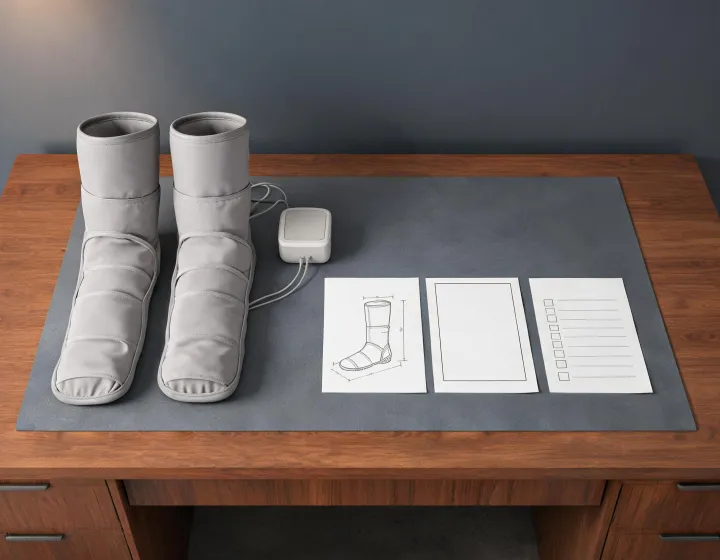
Describe intended business context, full-leg coverage, garment dimensions or size range, chamber or zone arrangement, requested pressure or intensity range, controller and cycle functions, power supply, materials, included garments, attachments and packaging. Separate mandatory requirements from acceptable alternatives so factories do not silently substitute a different configuration.
State quantity by variant and exact unit, US destination, requested timing, sample purpose and acceptance owner. If providing a budget, include the currency and whether it applies per unit or to the whole order. A high-end, mid-range, budget or undecided preference is a buyer request, not an approved supplier tier.
Record the model identifier, specification revision, included components, quantity unit, pack count, currency, unit price, minimum order, sample scope, proposed timing, delivery term and stated exclusions. Compare totals only after these fields refer to the same destination and order basis. Attach each label, manual, report or declaration to the response for the model it is meant to support.
Keep missing dimensions, operating values, accessory scope, packaging, test scope, freight responsibility and document applicability open. If a candidate offers an alternative, identify the changed attribute, commercial effect and approval owner. A lower subtotal does not resolve a missing requirement or excluded component.
The current approved brief defines what should be compared. Earlier drafts remain references, not the active scope.
Reference material can suggest attributes but does not establish inventory, authorization, supplier capability or exact-model evidence.
The proposed manufacturer confirms configuration, commercial terms and supporting files in writing for its own offer.
The buyer and qualified reviewers decide whether the product, evidence, supplier and terms meet the intended use and market.
Sample acceptance should use the same specification revision as the order decision. Record appearance, dimensions, controller behavior, included parts, packaging and documents relevant to the brief. This process supports traceability; it does not promise product performance or replace regulatory, safety or clinical expertise.